
Build a Business That Works Without You
(And Increases in Value Every Quarter)
For $2M–$50M contractor owners ready to reclaim their time, scale without chaos, and build a business worth 10x EBITDA when they are ready to exit.
Build a Business That Works Without You
(And Increases in Value Every Quarter)
For $2M–$50M contractor owners ready to reclaim their time, scale without chaos, and build a business worth 10x EBITDA when they are ready to exit.
You built this business for freedom.
But somewhere along the way, it became the thing trapping you. Every decision still runs through you.
Every fire gets escalated to your phone. You cannot take a week off without worrying the whole operation will fall apart.
The business is growing, but it feels heavier every year. More revenue, more employees, more complexity. And you are still the bottleneck.
You know something has to change. You cannot keep running at this pace. But you also cannot afford to step back, because without you in the middle of everything, things do not get done right.
And here is what most contractor-owners do not realize: the business that traps you is also the business that will be worth the least when you eventually want to transition or sell.

Private equity firms are paying 10x+ EBITDA.
that is 10 times your annual profit for well-run specialty contractors right now.
In 2025, PE buyers led construction M&A for the first time ever. They paid an average of 10.6x EBITDA for contractors with documented systems, second-layer leadership, and owner-independent operations.
That number is not theoretical. It is what buyers are actually paying for businesses that are structured the right way.

But here is the catch:
90% of business value comes from intangible factors.
Systems. Processes. Documentation. Leadership bench. The ability to operate without the founder in the room.
The trucks and equipment? That accounts for about 10% of what a buyer will pay.
Most contractors are sitting on businesses worth significantly more than they realize if they had the right infrastructure in place. But they do not know where the gaps are, and they do not have a plan to close them.
The Three Pathways
Not every contractor-owner is on the same journey. Some want to enjoy the business again. Some are planning a transition. Some have a clear exit timeline. That is why we built three distinct pathways. Each one is designed around where you are and what you want next.

Pathway 1: Grow to Enjoy the Business Again
For owners who are profitable but trapped.
You are not thinking about selling. You just want to step back from the day-to-day without everything collapsing. You want your weekends back. You want to enjoy what you built again.
The focus: Reclaim time and headspace. Remove yourself as the bottleneck. Build a business that operates without you in the weeds.
What we work on: Structural clarity, process documentation, owner leverage, leadership development, decision delegation.

Pathway 2: Grow to Transition on Your Terms
For owners who know change is coming, but are not ready to exit yet.
Maybe you are thinking about handing the business to a family member or key employee. Maybe you want to step into a chairman role and let someone else run operations.
Maybe you just want optionality.
The focus: Build a business that is transferable. Document everything. Develop second-layer leadership. Create infrastructure that survives a leadership change.
What we work on: Succession planning, leadership transitions, process codification, risk mitigation, business continuity planning.

Pathway 3: Grow to Exit and Maximize Value
For owners with a defined exit timeline who want to maximize what the business is worth.
You have 3–7 years before you want to sell. You know buyers are paying premium multiples for the right businesses. You want to make sure yours is one of them.
The focus: Position the business for a premium acquisition. Close the value gaps. Build the infrastructure that PE buyers pay 10x+ EBITDA for.
What we work on: Business valuation, value acceleration strategies, buyer positioning, deal readiness, intangible asset development, financial optimization.
How We Work Together
This is not generic business coaching. This is a structured, sprint-based engagement designed to remove the specific constraints holding your business back.
Phase 1: Structural Clarity Sprint (60 days)
What happens: We run the Value Opportunity Profile (VOP) diagnostic across 8 functional categories of your business. This is where we identify the top 2 priority constraints costing you the most time, money, or business value.
We establish a baseline business valuation so you have a measuring stick for all future work.
Then we tackle those top 2 constraints with tactical templates, frameworks, and accountability sessions.
What you get: Full VOP diagnostic report. Baseline valuation. Immediate priority roadmap. 60 days of structured implementation.
Phase 2: Constraint Removal Sprint (60–90 days)
What happens: We go deeper on the next layer of constraints. This is where the structural work really takes hold. Process documentation. Leadership development. Owner leverage strategies.
What you get: Updated diagnostic. Deeper implementation. Measurable progress on key metrics (time reclaimed, revenue per employee, owner dependency reduction).
Phase 3: Value Acceleration Sprint (90–120 days)
What happens: This phase is for owners on Pathway 2 or 3. We focus on long-term value drivers. Succession planning. Financial optimization. Deal readiness. Positioning for premium acquisition.
What you get: Full business value acceleration plan. Updated valuation showing measurable increase. Strategic roadmap for transition or exit.
What You Actually Get

Value Opportunity Profile (VOP) Diagnostic
A comprehensive analysis of your business across 8 CVM functional categories. This identifies exactly where you are losing time, money, and business value.

Baseline Business Valuation
We establish what your business is worth today. Then we track how that number increases as we remove constraints and build intangible value.

Top 2 Priority Constraints Identified
Most businesses have dozens of problems. We identify the 2 that matter most and solve those first.

Tactical Templates and Tools
You do not just get advice. You get actual frameworks, templates, and tools you can implement immediately.

Access to John Throughout the Engagement
This is not a cookie-cutter program. You have direct access to John for questions, roadblocks, and course corrections.
Accountability Sessions
Regular check-ins to make sure work is getting done and results are showing up.


Why John Oestreich
Most business consultants have never run anything at scale. John has.
John formerly led the Eastern US region of a publicly traded complex services organization. His region alone generated $236 million in revenue across 80 offices, approximately 1,000 people, and his region alone generated $236 million in revenue across 80 offices and approximately 1,000 people..
That is not theory. That is operational leadership at scale.
But here is what makes John different: he also has deep credibility in the trades.
John has been around the construction industry since birth. His father was President and CEO of a general commercial contractor. John’s first job was as a laborer. His clients today include HVAC, electrical, roofing, plumbing, and fire protection contractors, other construction contractors, and the industries that support them — the same trades he grew up around.
He is not a consultant who discovered the trades as a market opportunity. He is an advisor who has lived in this world his entire life.
John is a Certified Value Growth Advisor (CVGA), Certified Exit Planning Advisor (CEPA), and Certified Plan Fiduciary Advisor (CPFA) — credentials that underpin the structured methodology behind every engagement.
That combination is rare. And it is exactly why contractor-owners trust him with their most valuable asset.
What Other Contractors Say
Frequently Asked Questions
How long does an engagement last?
Each sprint phase is 60–120 days depending on scope. You can do one sprint and stop, or continue into additional phases as new priorities emerge. Most clients work through 2–3 sprint cycles over 12–18 months.
What if I am not sure which pathway I am on?
That is what the CAT diagnostic and strategy call are for. Most owners are not 100% clear when they start. We help you figure that out.
Do I need to complete the CAT diagnostic first?
It helps, but it is not required. If you already know your business inside and out and you are ready to move forward, we can start with the VOP diagnostic during Phase 1.
What is the capacity limit?
John works with a maximum of 3 active sprint clients at one time. That is 60 hours per month of capacity. Once those spots are filled, new clients go on a waitlist.
How do I know if I am a fit?
If you are a $2M–$50M contractor owner who is trapped in your business, willing to invest in systems and structure, and ready to actually implement (not just collect advice), you are probably a fit.
What is the time commitment on my end?
Plan for 3–5 hours per week during active sprint phases. That includes team sessions, implementation work, and accountability check-ins. If you cannot commit that time, this will not work.
Get In Touch
Email : [email protected]
Phone: (402) 429-1711
Location:
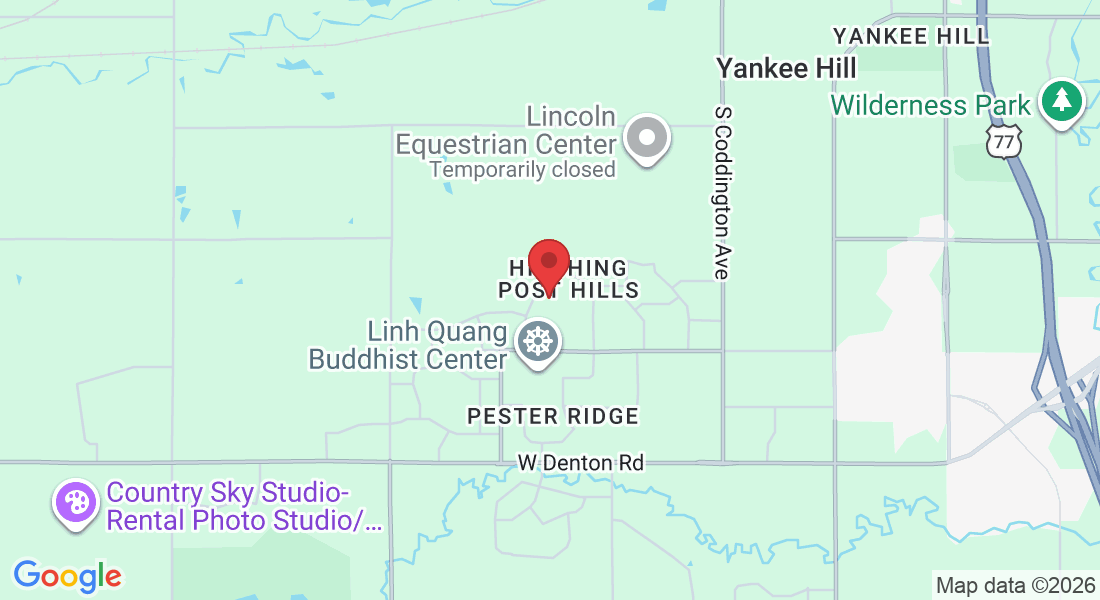
6000 Saddle Creek Trl, Lincoln, NE 68523
Privacy Policy | Terms of Service
Copyright © 2026 | ContractorTrax | All Rights Reserved